SocialIvyMedia

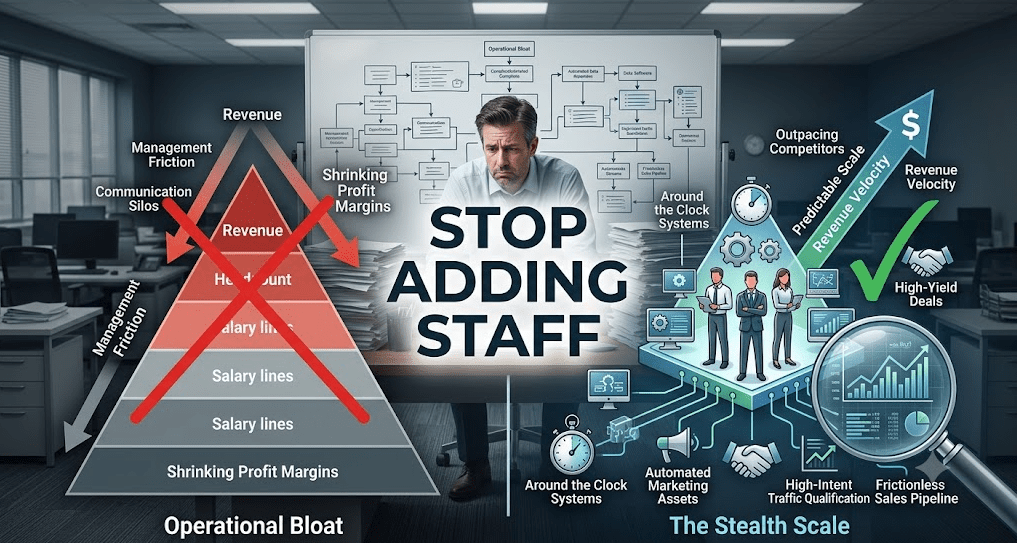
The Stealth Scale: How to Outpace Competitors Without Increasing Headcount.

The Hidden Trap of Operational Bloat For decades, mid-market executives used a flawed metric to measure company success: internal headcount. Growing a business traditionally meant expanding physical offices, adding middle management layers, and steadily growing the payroll. Leaders assumed that a larger staff naturally meant a more powerful organization. In the 2026 economic environment, that old approach is a major operational risk. Adding employees to solve a revenue problem introduces management friction, creates communication silos, and significantly increases your baseline overhead. When your growth relies on adding more human labor to handle every new customer, your profit margins inevitably shrink as you try to scale. True market dominance requires a shift to a leaner strategy: The Stealth Scale. This framework focuses on expanding your market share, multiplying your sales velocity, and outpacing your legacy competitors while keeping your core internal team lean. Achieving sustainable local business growth today isn’t about managing a large workforce; it’s about engineering integrated acquisition systems that work around the clock. By replacing manual workflows with automated marketing assets, you can scale revenue without adding administrative burden to your payroll. Section 1: The Diagnostic — Why Linear Hiring Stalls Real Growth When a company’s revenue plateaus, leadership usually defaults to hiring more people—adding more sales reps, more account managers, or more marketing coordinators. This linear approach fails because it misdiagnoses an engineering problem as a staffing problem. When your underlying marketing channels are uncoordinated and operate in silos, bringing in more employees simply applies human effort to a broken machine. This lack of integration creates major blind spots across your business pipeline. Fragmented teams spend their valuable time manually sorting cold leads, chasing down unresponsive prospects, or entering data across different platforms. Because traditional models lack automated data tracking across the customer lifecycle, your team ends up focusing on busywork rather than closing high-value deals. Your customer acquisition costs (CAC) rise, and your internal staff burns out. This happens because your digital infrastructure isn’t built to handle, qualify, and nurture high-intent traffic automatically. ⚠️ Strategist Warning If your business requires adding a new employee for every fixed percentage of revenue growth, you aren’t building a scalable asset. You are running a labor-intensive operation that is highly vulnerable to market downturns and rising payroll costs. Section 2: The Solution — The Automated Growth Architecture The alternative to structural bloat is building a centralized, automated acquisition engine. This framework removes manual bottlenecks, allowing a lean internal team to handle a massive volume of new customer pipelines with absolute precision. Phase 1: High-Intent Asymmetric Traffic Capture To scale cleanly without expanding your team, you must stop wasting time on low-quality leads. Your marketing needs to target prospects who are ready to buy right now. By running precision-targeted Pay Per Click (PPC) Traffic campaigns, you put your brand directly in front of buyers at the exact moment their commercial intent peaks, ensuring your team only deals with high-value inquiries. This immediate inbound stream is reinforced by a permanent organic footprint. Implementing an advanced Local & Competitive SEO strategy ensures your business ranks at the top of local maps and AI search tools. This builds a continuous flow of organic traffic without requiring your staff to make cold calls or do manual outreach. Phase 2: Structural Conversion Machinery Bringing prospects to your site is useless if your team has to manually qualify every visitor. Your website must act as an automated filtration system. Building your digital asset on a modern, high-performance Website Design & Development foundation ensures that information is accessible instantly, answering pre-purchase questions without requiring a phone call. To maximize the value of this traffic, a Growth Architect implements a specialized Sales & Marketing Funnel Design. This structure automatically qualifies prospects based on their answers, sorting them into distinct pathways and delivering hot, sales-ready opportunities directly to your calendar. Phase 3: Instant Conversational Capture & Reputation Systems The fastest way to lose a hot prospect is making them wait for a human response. A lean operation uses technology to respond instantly. Integrating an automated Live Chat Lead Conversion engine allows your digital platform to engage web visitors in real time, capturing vital contact information and setting appointments automatically. This automated trust-building is accelerated by a strong online presence. By utilizing an automated Review & Reputation Management system, your brand collects, monitors, and showcases client reviews completely on autopilot. This continuously builds social proof without pulling your team away from their primary duties. Phase 4: Multi-Touch Omnipresent Authority Scaling without bloat requires your brand to remain visible across multiple channels simultaneously. Running optimized Social Media Management & Marketing campaigns keeps your audience engaged and builds long-term authority, prompting organic word-of-mouth referrals that require zero manual effort from your staff. To cut through digital noise, top-performing companies pair their online systems with tangible real-world media. Deploying targeted Print Media campaigns places your business directly into high-value local households. When these materials are designed with premium Logo & Graphic Design, your company projects an elite, enterprise-level image that makes you look much larger than your actual headcount. Finally, you can maximize your local market reach by entering streaming networks. Leveraging Connected TV Advertising allows you to broadcast cinematic commercial spots directly to specific neighborhoods. This combines the major credibility of television advertising with the precise audience targeting of digital data, expanding your reach without adding a single sales rep to your roster. Section 3: The Data Matrix — Labor-Heavy Bloat vs. Scalable Automation The financial impact of choosing automation over linear hiring is immediate and clear. Independent data from eMarketer shows that businesses that leverage automated, multi-channel marketing platforms achieve up to 30% higher profit margins than companies reliant on manual sales workflows. From a technical standpoint, Search Engine Journal metrics demonstrate that automated conversion architectures capture and secure significantly more mobile search traffic, as modern users favor immediate, self-service digital paths over booking manual discovery calls. Furthermore, direct response research from the Data & Marketing Association (DMA) shows that combining

The Stealth Scale: How to Outpace Competitors Without Increasing Headcount. Read More »
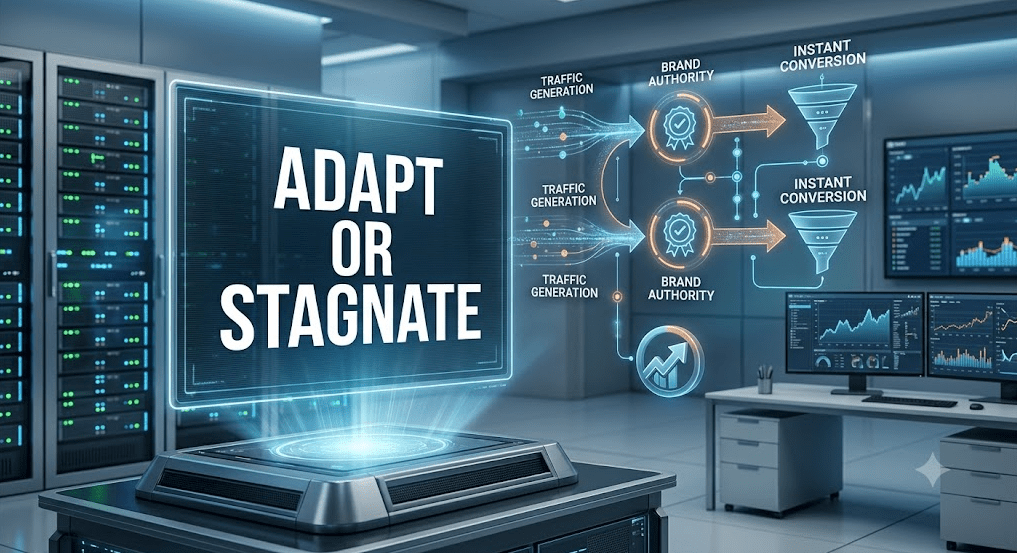
Digital Darwinism: Adapting Your Brand for the 2026 Economy.

The Reality of Digital Darwinism The modern economy is undergoing a ruthless evolutionary sorting event. As we push through 2026, the marketplace has no patience for inefficient marketing models. Consumers are completely saturated with generic corporate noise, AI-generated spam content, and repetitive digital ads. This massive shift has created an era of intense consumer skepticism and digital fatigue. Brands that rely on passive, outdated customer acquisition methods are quietly sliding into irrelevance. This shift isn’t just a change in user preference; it is Digital Darwinism—a state where technology and society evolve faster than a business’s capacity to adapt. To secure sustainable local business growth today, you cannot simply do more of what worked in the past. Casting a wide, unguided net across the web is no longer a viable plan; it is a financial liability. Survival demands a shift to precision engineering—building integrated, authoritative, and data-driven systems that capture customer intent the exact moment it happens and convert it with absolute efficiency. Section 1: The Diagnostic — Why Outdated Strategies Are Facing Extinction Most struggling marketing campaigns suffer from the same foundational flaw: structural fragmentation. Companies routinely buy traffic without optimizing their conversion assets, or blast out social media content that isn’t connected to a clear sales pipeline. When marketing channels operate in isolated silos, they create a broken customer journey that frustrates prospects and drives them straight to faster, more agile competitors. The root cause of this failure is a lack of deep data attribution across the customer lifecycle. These information gaps mask real problems in your funnel. An agency might hand you a report showing great click-through rates, while your actual sales pipeline stays completely dry. This disconnect happens because legacy frameworks focus on vanity metrics like impressions and clicks rather than real revenue velocity. Furthermore, uncoordinated strategies fail to build long-term brand equity, leaving businesses entirely vulnerable to sudden ad network price spikes and algorithm updates. ⚠️ Strategist Warning If your growth strategy relies on an uncoordinated mix of freelancers or agencies who don’t align their data, your marketing budget is leaking capital. Traffic without a structured conversion infrastructure is simply an expensive way to burn money. Section 2: The Solution — The Integrated Growth Architecture To survive digital darwinism and capture dominant market share, you must build a highly synchronized, multi-layered acquisition engine. This architecture links traffic generation, brand authority, and instant conversion into a single corporate asset. Phase 1: High-Intent Traffic Engineering The foundation of market survival relies on intercepting prospects at their peak moment of intent. Instead of wasting money on broad, non-converting search terms, your system must target localized, transactional queries. Running highly targeted Pay Per Click (PPC) Traffic campaigns gives your brand immediate visibility at the top of search networks when buyers are ready to purchase. This immediate paid traffic should be supported by a long-term, compounding Local & Competitive SEO strategy. This ensures your business ranks naturally in local map packs and new conversational AI search tools, which heavily favor real-world proximity and semantic authority over basic website age. Phase 2: High-Performance Conversion Infrastructure Driving high-intent traffic to your business is meaningless if your digital platform can’t close the deal. In an economy defined by speed, your website cannot be a slow, passive brochure. Building your digital storefront on a fast, modern Website Design & Development foundation completely removes technical friction, keeping buyers engaged. To squeeze maximum revenue out of every visitor, a Growth Architect shapes this traffic using a custom Sales & Marketing Funnel Design. This approach replaces generic form fields with smart, multi-tier engagement paths tailored to exactly where the buyer is in their decision-making process. Phase 3: Frictionless Capture & Trust Acceleration In a fast-paced market, slow response times kill sales. If a prospect reaches out and waits hours for a reply, they will instantly move to the next option. Deploying an active Live Chat Lead Conversion system lets you engage inbound traffic immediately, turning casual browsing into verified sales conversations before the prospect leaves your site. This immediate responsiveness must be reinforced by a strong public reputation. Implementing automated Review & Reputation Management systems allows your brand to consistently gather, monitor, and highlight authentic client feedback, removing buyer hesitation right at the final closing point. Phase 4: Multi-Touch Authority & Brand Equity A truly resilient brand does not rely on a single source of traffic. To insulate your business against market shocks, you need multi-touch presence across both digital and physical platforms. Running active Social Media Management & Marketing campaigns keeps your community engaged and drives branded search queries that lower your acquisition costs over time. To break past online noise, top-tier brands combine digital marketing with real-world touchpoints. Utilizing premium Print Media campaigns targets high-value local demographics right in their physical environments. When these physical assets are shaped by professional Logo & Graphic Design, your company establishes an elite, enterprise-level market presence that minor competitors cannot challenge. Finally, the modern growth ecosystem scales brand awareness via streaming networks. By leveraging Connected TV Advertising, local businesses can place cinematic commercial spots onto streaming screens in specific neighborhoods, blending the massive storytelling impact of traditional television with the precise targeting data of digital media. Section 3: The Data Matrix — Fragmented Tactics vs. Evolutionary Scale The financial difference between adapting to the modern economy and clinging to old tactics is stark. Analytical insights from eMarketer reveal that businesses running fully integrated omni-channel frameworks retain significantly more customers than those relying on isolated, single-channel campaigns. From an organic perspective, Search Engine Journal highlights that modern search algorithms favor businesses that show complete entity authority—meaning your web core web metrics, local map listings, and reviews must form a seamless web of data. Furthermore, physical response studies from the Data & Marketing Association (DMA) confirm that combining targeted print touches with digital remarketing can lift overall campaign returns by up to 40% over digital-only strategies. The following data matrix compares standard, uncoordinated marketing efforts against the engineered systems deployed by

Digital Darwinism: Adapting Your Brand for the 2026 Economy. Read More »

The Death of the Generalist: Why Your Business Needs a Growth Architect.

The Operational Collapse of the “Jack-of-All-Trades” For years, growing mid-market enterprises have leaned on a dangerous hiring myth: the marketing generalist. Business owners routinely recruit a single internal specialist or small boutique agency and task them with executing an impossible list of demands—running Google Ads, optimizing search engines, producing video assets, and managing public relations. In a less competitive era, this fragmented, surface-level approach could keep a business afloat. In 2026, that era is officially over. The explosion of algorithmic complexity, the introduction of conversational AI engines, and deep digital fatigue have made broad marketing execution completely useless. When your baseline acquisition relies on a generalist who spends their morning writing a blog post and their afternoon fiddling with an ad manager account, you aren’t positioning your brand for local business growth. You are actively funding operational inefficiency. Winning your market now requires deep, expert execution across multiple channels at the exact same time. The era of the generalist has passed; your business requires a Growth Architect. You need an elite operator who does not merely complete tasks, but instead designs, builds, and manages an integrated infrastructure engineered to convert local attention into predictable cash flow. Section 1: The Diagnostic — Why Fragmented Teams Burn Cash When businesses fail to hit their scaling targets, leadership usually blames the advertising platform or assumes their product market fit is slipping. The diagnostic reality is almost always different: the breakdown lies in structural fragmentation. A standard generalist or traditional agency treats marketing channels as completely isolated projects. They launch isolated Google ads without checking the target landing page layout, or post on social networks without setting up an immediate capture pipeline. This disconnected execution creates major gaps throughout your pipeline. Because generalists lack the data-driven focus required to track user pathways across the entire customer lifecycle, subtle leaks end up draining your profitability. For instance, your analytics might show excellent top-of-funnel ad clicks, but your actual sales pipeline remains completely stagnant. Traditional marketing teams often mask these gaps by pointing to vanity metrics like “social media engagement” or “total brand impressions.” Meanwhile, your customer acquisition costs (CAC) continue to rise because your core digital infrastructure cannot efficiently handle and convert high-intent web traffic. ⚠️ Strategist Warning Splitting your marketing budget across disjointed freelancers or generalists who do not communicate with each other creates disjointed data tracking. If you cannot trace an individual lead from their initial ad click or search query directly to a cleared invoice, you are guessing with your capital. Section 2: The Solution — The Growth Architect Framework The alternative to fragmented marketing is a centralized acquisition system designed by a Growth Architect. This structural methodology abandons short-term, uncoordinated patches and builds an interconnected marketing ecosystem where every channel actively supports and scales the others. Phase 1: High-Intent Capture Engineering An architect’s first objective is securing predictable pipelines of high-intent prospects. Instead of burning budget on broad, non-converting keywords, the system focuses heavily on transactional local searches. By deploying highly specialized Local & Competitive SEO structures, your brand wins prominent real estate on map networks and AI search systems long before a competitor registers the threat. This stable organic footprint is reinforced by real-time acquisition. Utilizing precision-targeted Pay Per Click (PPC) Traffic allows your business to instantly capture consumers at the exact moment their purchase intent peaks, establishing a reliable, high-intent inbound pipeline. Phase 2: Structural Conversion Infrastructure Bringing visitors to your digital doorstep is a liability if your site can’t close the deal. A Growth Architect treats your website as an active conversion asset. By building your platform on a robust Website Design & Development foundation, you eliminate code bloat and slow load speeds, completely removing user friction. To maximize the commercial value of this inbound traffic, the architecture funnels users into a custom Sales & Marketing Funnel Design. This framework replaces one-size-fits-all forms with logical, multi-tier engagement paths tailored to the prospect’s actual level of commercial intent. Phase 3: Conversational Capture & Trust Acceleration In a highly competitive market, speed to lead is a critical performance indicator. A Growth Architect plugs pipeline leaks by adding real-time communication systems. By using Live Chat Lead Conversion tools, your digital storefront engages incoming leads instantly, converting passive web browsers into verified opportunities before they drop out of your pipeline. This immediate engagement is reinforced by automated social proof. Deploying an active Review & Reputation Management system ensures your brand systematically collects, tracks, and displays premium client reviews, removing conversion friction right at the final purchasing point. Phase 4: Omni-Channel Domination & Brand Equity A truly resilient growth system does not rely on a single channel. To insulate your business against algorithmic updates, an architect builds multi-touch presence across both digital and physical platforms. Maintaining active Social Media Management & Marketing campaigns keeps your community engaged and drives branded search queries that lower your blended acquisition costs over time. To break past online noise, top-tier operators link digital campaigns with tangible, real-world touchpoints. Utilizing premium Print Media targeting places your brand directly into high-value households. When backed by cohesive assets engineered through professional Logo & Graphic Design, your company establishes clear market authority that smaller, tactical competitors cannot challenge. Finally, the modern growth ecosystem scales brand awareness via streaming networks. By leveraging Connected TV Advertising, local businesses can place cinematic commercial spots onto streaming screens in specific neighborhoods, blending the massive storytelling impact of traditional television with the precise targeting data of digital media. Section 3: Data-Driven Performance — Generalists vs. Architects The difference between a generalist’s campaign and an architect’s system shows up clearly in your financial metrics. Data from Search Engine Journal confirms that search algorithms increasingly reward cohesive technical infrastructure—meaning businesses that combine local directory signals, lightning-fast site performance, and deep topical authority consistently outrank brands using simple keyword tactics. Additionally, eMarketer reports that businesses implementing integrated omni-channel frameworks realize substantially higher long-term customer retention rates, driven by a seamless, multi-touch customer experience. From an offline perspective, studies

The Death of the Generalist: Why Your Business Needs a Growth Architect. Read More »

Marketing Debt: Is Your Current Strategy Costing You Future Profits?

The Hidden Liability in Your Growth Strategy In corporate finance, every executive understands technical debt—the cost of choosing a quick, messy software fix today over a scalable architectural build that takes longer. Yet, few business leaders recognize a far more insidious drain on their balance sheet: marketing debt. Marketing debt accrues whenever a brand prioritizes short-term metric spikes over long-term structural asset building. It is the consequence of selecting fast, superficial tactics over foundational growth systems. When you build your customer acquisition models entirely on volatile third-party advertising algorithms without investing in sustainable brand infrastructure, you aren’t actually scaling. You are taking out a high-interest functional loan. As search saturation peaks and consumer data privacy frameworks tighten, the interest on that loan is coming due. Businesses that spent years treating marketing as a series of disconnected, ad-hoc tasks are watching their customer acquisition costs skyrocket while their baseline conversion metrics tank. If your growth engine requires a continuous, increasing injection of paid capital just to maintain your current revenue plateaus, your strategy isn’t yielding profits. It’s masking a profound structural deficit. Section 1: The Diagnostic — Spotting the Leaks in Your Engine Marketing debt does not announce itself overnight. It quietly accumulates across your operations, manifesting as subtle inefficiencies before hardening into a full-scale growth bottleneck. The most common driver of this liability is a reliance on disjointed, siloed execution models. When a corporate team purchases immediate paid web traffic without establishing an optimized landing page system, or pushes social media content completely untethered from a logical conversion pipeline, debt accumulates. Over time, these disconnected efforts distort the entire buyer journey. This friction directly pushes your prospective customers away from your brand and straight toward leaner, structurally optimized competitors. The underlying issue stems from a failure to track data across the entire customer lifecycle. Siloed data environments routinely obscure systemic operation failures. For example, an agency may showcase phenomenal top-of-funnel click-through rates while your internal sales floor deals with a cold, low-intent pipeline. Because legacy frameworks naturally prioritize surface-level metrics over comprehensive pipeline velocity, businesses consistently over-allocate capital to top-of-funnel volume while ignoring massive operational leaks further down the line. ⚠️ Strategist Warning If your marketing architecture relies entirely on continuous paid ad spend to generate every single dollar of inbound revenue, you do not own an enterprise asset. You own an expense line item. The moment you decrease your ad spend, your revenue pipeline will instantly drop to zero. Section 2: The Solution — Building an Asset-Based Ecosystem To eliminate marketing debt and recapture lost margin, organizations must transition from fragmented tactical execution to a fully integrated, asset-driven architecture. This transition replaces temporary campaigns with permanent marketing infrastructure designed to compound in value over time. Phase 1: Securing High-Intent Foundational Traffic Paying off marketing debt begins by moving away from temporary, interruption-based ad models and focusing on sustainable visibility. Rather than competing for broad, overpriced keywords, brands can establish immediate authority by dominating high-intent commercial search spaces. Implementing systematic Local & Competitive SEO initiatives ensures your brand secures permanent digital real estate within local map layouts and modern conversational search engines. This core organic baseline should be augmented with highly targeted Pay Per Click (PPC) Traffic campaigns. By pairing organic map dominance with highly focused paid search terms, you can capture high-intent buyers exactly when they are looking to transact, entirely bypassing generic web noise. Phase 2: Converting Intent Through Engineered Infrastructure Traffic capture is meaningless if your digital platform cannot convert visitors efficiently. A business website should never function as a passive brochure; it must serve as an active conversion vehicle. Building your digital home on a highly responsive, high-performance Website Design & Development foundation completely removes user friction, drastically reducing bounce rates and maximizing the value of every visitor. To turn this traffic into revenue, you must replace basic contact forms with an advanced Sales & Marketing Funnel Design. An optimized funnel maps directly to distinct stages of consumer awareness, presenting tailored pathways for users whether they are ready to buy immediately or are evaluating options. Phase 3: Immediate Capture and Reputation Acceleration In a fast-moving market, lead decay happens in minutes. If a prospect reaches out and encounters a long delay, they will immediately jump to the next competitor. Implementing an automated Live Chat Lead Conversion system ensures that prospective buyers receive real-time answers, capturing hot leads when their intent is highest. This real-time responsiveness must be backed by undeniable social proof. By deploying automated Review & Reputation Management systems, you can systematically capture and display authentic client feedback across critical review platforms, naturally breaking down customer hesitation at the final decision stage. Phase 4: Long-Term Omni-Channel Brand Equity True protection against marketing debt comes from building an omnipresent brand that reaches audiences across multiple environments. Consistently maintaining highly optimized campaigns through Social Media Management & Marketing keeps your brand top-of-mind, driving organic referral loops and brand searches that insulate you from ad platform price increases. To solidify your presence, look beyond digital screens. Combining online positioning with premium Print Media creates a high-impact, physical connection with your target demographics. When these physical assets are shaped by professional Logo & Graphic Design, they project enterprise-level scale, creating an elite brand identity that small, tactical competitors simply cannot copy. Finally, forward-thinking brands scale their messaging by tapping into streaming entertainment. Using precision-targeted Connected TV Advertising allows businesses to deliver cinematic video commercials directly to specific household profiles and geographic zones, merging the massive storytelling impact of traditional TV with the granular measurement capabilities of digital marketing. Section 3: The Hard Data — Debt Elimination vs. Tactical Patches The financial consequences of marketing debt are easily measurable. Independent data from Search Engine Journal shows that brands relying purely on short-term tactical patches see an average 22% annual increase in acquisition costs due to ad inflation and algorithm changes. Conversely, eMarketer reports that enterprises investing in integrated omni-channel structures see a substantial boost in customer lifetime value (LTV)

Marketing Debt: Is Your Current Strategy Costing You Future Profits? Read More »

Scaling to 8-Figures: The Architecture of High-Velocity Business Growth.

The High-Cost Illusion of “Staying Busy” In the 2026 hyper-growth economy, the most expensive asset in your business is your attention. Yet, millions of business owners operate under a dangerous operational illusion: equating personal exhaustion with corporate velocity. If you are a founder or an executive spending your days manually auditing lead sheets, copy-pasting follow-up emails, or mediating disjointed workflows between team members, you aren’t running an enterprise—you are working for one. The speed of market shifts demands that leadership remain strategic, not clerical. According to 2026 Marketing Statistics from HubSpot, organizations that structurally integrate automated workflow systems scale their revenue footprints significantly faster than competitors relying on manual labor. This structural advantage is Automation Arbitrage. At Social Ivy Media, we dismantle structural operational drag, transforming your digital presence from a passive brochure into an automated customer acquisition asset via high-performance Website Design & Development. SECTION 1: The Diagnostic — Quantifying Your “Operations Tax” When growth plateaus, executives routinely default to hiring more staff or expanding their top-of-funnel ad spend. They pour premium capital into Pay Per Click (PPC) Traffic, completely blind to the fact that their internal operations engine is completely fragmented. The Interactivity Friction Gap If an inquiry lands on your site via a paid campaign, but requires manual data input, manual assignment to a sales representative, and manual drafting of an introductory message, you are paying a catastrophic “Operations Tax.” By the time your team makes physical contact, the prospect’s intent has cooled completely. When your outward-facing Social Media Management & Marketing campaigns are completely isolated from an automated back-end intake architecture, you are actively burning your customer acquisition budget. STRATEGIST WARNING: The Dead Zone Manual lead qualification is the ultimate growth killer. If an inbound high-intent inquiry enters your database after-hours and sits unaddressed until the next business morning, you have effectively zeroed out your conversion probability. Speed-to-lead is no longer an optional optimization metric—it is the baseline variable of survival. SECTION 2: The Three Pillars of Automation Arbitrage To reclaim 40 hours a week and unlock unprecedented scalability, your business infrastructure must be stabilized across three autonomous functional layers. 1. Conversational Intent Capture True leverage requires handling client engagement without human latency. We install intelligent, automated Live Chat Lead Conversion platforms designed to instantly greet, qualify, and segment on-site traffic. This baseline automation layer engages visitors when intent is highest, qualifying prospects and setting high-value sales calls autonomously. 2. Deep Data Synchronization Your tech stack must function as a cohesive neural network. We deploy the Best Conversion Rate Optimization Tools for Marketers (2026) to link user behaviors to downstream communication protocols. When an on-site action triggers a targeted automated sequence, user paths are optimized instantly based on behavioral data loops. 3. The Omnichannel Echo Chamber High-yield automation architecture extends far beyond simple digital triggers. Advanced operations cross the divide into physical touchpoints to solidify market authority. By linking real-time web activities with programmatic, high-end Print Media fulfillment engines, cold prospects are engaged via print assets immediately after interacting with a digital campaign or a Connected TV Advertising asset. This cross-channel synergy closes the buyer’s trust loop without requiring an ounce of manual executive oversight. SECTION 3: Systems Architecture and Perceived Authority A highly optimized back-end engine demands an equally flawless front-end presentation. If an automated workflow captures a premium lead, but routes that lead to a platform featuring inconsistent branding, fractured layouts, or outdated imagery, your systems credibility collapses. True structural authority is earned when high-velocity mechanics mirror exceptional presentation design. As validated in reviews of the Best SEO Websites [Updated for 2026], long-term client retention is deeply intertwined with visual trust and structured operational speed. By upgrading your asset systems with premium Logo & Graphic Design guidelines and using data insights from the 10 Best Conversion Rate Optimization Tools in 2026, you build an unshakeable ecosystem. When high-velocity automated workflows are wrapped in a world-class visual package, your company can command premium prices effortlessly. SECTION 4: The Metrics of Leverage — Capital Performance When you replace manual operational drag with high-yield automated data architecture, your organizational scalability metrics shift instantly. Operational Vector Legacy Manual Workflow Automation Arbitrage Model Lead Response Time 4 to 24 Hours (Human Speed) Instantaneous via Live Chat Lead Conversion Data Synchronization Fragmented Copy-Pasting Zero-Latency CRM Integrations Executive Focus Repetitive Task Triage Pure Revenue & High-Level Strategy Search Architecture Static Static Rankings Data-Driven Local & Competitive SEO According to the Incremys 2026 Digital Marketing Statistics, enterprises that transition to integrated multi-platform automation engines experience up to a 40% enhancement in net customer lifecycle retention. This system efficiency directly optimizes active Pay Per Click (PPC) Traffic campaigns, reducing overall client acquisition costs while multiplying net margins. SECTION 5: Why Social Ivy Media? Social Ivy Media isn’t an agency that settles for tracking vanity metrics like post impressions or shallow click volumes. We are growth architects. Spearheaded by CEO Dion De Lauder, our operational philosophy is rooted in the high-yield AGILE methodology—meticulously engineered to build dominant corporate empires inside competitive markets like St. Petersburg and Tampa Bay. Whether we are engineering frictionless conversion frameworks through comprehensive Sales & Marketing Funnel Design or refining operations via enterprise-level 1 on 1 Coaching & Consulting, we replace manual bottlenecks with automated pipelines. We embed technical strategies sourced from The Best Link Building Tools for Digital Marketing (2026 Guide) and 7 Top Link-Building Tools for SEO Results in 2026 to elevate search metrics, while deploying automated assets to continually protect your market standing using advanced Review & Reputation Management. SECTION 6: The 30-Day Automation Integration Blueprint CONCLUSION: Reclaim Your Executive Leverage Your operational architecture is the most critical infrastructure in your business. Until it stagnates. Wasting precious executive hours on low-leverage tasks is a major competitive vulnerability. To scale a legacy organization into a hyper-profitable market leader, you must trade human bottlenecking for high-yield automation arbitrage. At Social Ivy Media, we don’t just build brands. We build empires.

Scaling to 8-Figures: The Architecture of High-Velocity Business Growth. Read More »

The Automation Arbitrage: Reclaiming 40 Hours a Week with AI Workflows.

The High-Cost Illusion of “Staying Busy” In the 2026 hyper-growth economy, the most expensive asset in your business is your attention. Yet, millions of business owners operate under a dangerous operational illusion: equating personal exhaustion with corporate velocity. If you are a founder or an executive spending your days manually auditing lead sheets, copy-pasting follow-up emails, or mediating disjointed workflows between team members, you aren’t running an enterprise—you are working for one. The speed of market shifts demands that leadership remain strategic, not clerical. According to 2026 Marketing Statistics from HubSpot, organizations that structurally integrate automated workflow systems scale their revenue footprints significantly faster than competitors relying on manual labor. This structural advantage is Automation Arbitrage. At Social Ivy Media, we dismantle structural operational drag, transforming your digital presence from a passive brochure into an automated customer acquisition asset via high-performance Website Design & Development. SECTION 1: The Diagnostic — Quantifying Your “Operations Tax” When growth plateaus, executives routinely default to hiring more staff or expanding their top-of-funnel ad spend. They pour premium capital into Pay Per Click (PPC) Traffic, completely blind to the fact that their internal operations engine is completely fragmented. The Interactivity Friction Gap If an inquiry lands on your site via a paid campaign, but requires manual data input, manual assignment to a sales representative, and manual drafting of an introductory message, you are paying a catastrophic “Operations Tax.” By the time your team makes physical contact, the prospect’s intent has cooled completely. When your outward-facing Social Media Management & Marketing campaigns are completely isolated from an automated back-end intake architecture, you are actively burning your customer acquisition budget. STRATEGIST WARNING: The Dead Zone Manual lead qualification is the ultimate growth killer. If an inbound high-intent inquiry enters your database after-hours and sits unaddressed until the next business morning, you have effectively zeroed out your conversion probability. Speed-to-lead is no longer an optional optimization metric—it is the baseline variable of survival. SECTION 2: The Three Pillars of Automation Arbitrage To reclaim 40 hours a week and unlock unprecedented scalability, your business infrastructure must be stabilized across three autonomous functional layers. 1. Conversational Intent Capture True leverage requires handling client engagement without human latency. We install intelligent, automated Live Chat Lead Conversion platforms designed to instantly greet, qualify, and segment on-site traffic. This baseline automation layer engages visitors when intent is highest, qualifying prospects and setting high-value sales calls autonomously. 2. Deep Data Synchronization Your tech stack must function as a cohesive neural network. We deploy the Best Conversion Rate Optimization Tools for Marketers (2026) to link user behaviors to downstream communication protocols. When an on-site action triggers a targeted automated sequence, user paths are optimized instantly based on behavioral data loops. 3. The Omnichannel Echo Chamber High-yield automation architecture extends far beyond simple digital triggers. Advanced operations cross the divide into physical touchpoints to solidify market authority. By linking real-time web activities with programmatic, high-end Print Media fulfillment engines, cold prospects are engaged via print assets immediately after interacting with a digital campaign or a Connected TV Advertising asset. This cross-channel synergy closes the buyer’s trust loop without requiring an ounce of manual executive oversight. SECTION 3: Systems Architecture and Perceived Authority A highly optimized back-end engine demands an equally flawless front-end presentation. If an automated workflow captures a premium lead, but routes that lead to a platform featuring inconsistent branding, fractured layouts, or outdated imagery, your systems credibility collapses. True structural authority is earned when high-velocity mechanics mirror exceptional presentation design. As validated in reviews of the Best SEO Websites [Updated for 2026], long-term client retention is deeply intertwined with visual trust and structured operational speed. By upgrading your asset systems with premium Logo & Graphic Design guidelines and using data insights from the 10 Best Conversion Rate Optimization Tools in 2026, you build an unshakeable ecosystem. When high-velocity automated workflows are wrapped in a world-class visual package, your company can command premium prices effortlessly. SECTION 4: The Metrics of Leverage — Capital Performance When you replace manual operational drag with high-yield automated data architecture, your organizational scalability metrics shift instantly. Operational Vector Legacy Manual Workflow Automation Arbitrage Model Lead Response Time 4 to 24 Hours (Human Speed) Instantaneous via Live Chat Lead Conversion Data Synchronization Fragmented Copy-Pasting Zero-Latency CRM Integrations Executive Focus Repetitive Task Triage Pure Revenue & High-Level Strategy Search Architecture Static Static Rankings Data-Driven Local & Competitive SEO According to the Incremys 2026 Digital Marketing Statistics, enterprises that transition to integrated multi-platform automation engines experience up to a 40% enhancement in net customer lifecycle retention. This system efficiency directly optimizes active Pay Per Click (PPC) Traffic campaigns, reducing overall client acquisition costs while multiplying net margins. SECTION 5: Why Social Ivy Media? Social Ivy Media isn’t an agency that settles for tracking vanity metrics like post impressions or shallow click volumes. We are growth architects. Spearheaded by CEO Dion De Lauder, our operational philosophy is rooted in the high-yield AGILE methodology—meticulously engineered to build dominant corporate empires inside competitive markets like St. Petersburg and Tampa Bay. Whether we are engineering frictionless conversion frameworks through comprehensive Sales & Marketing Funnel Design or refining operations via enterprise-level 1 on 1 Coaching & Consulting, we replace manual bottlenecks with automated pipelines. We embed technical strategies sourced from The Best Link Building Tools for Digital Marketing (2026 Guide) and 7 Top Link-Building Tools for SEO Results in 2026 to elevate search metrics, while deploying automated assets to continually protect your market standing using advanced Review & Reputation Management. SECTION 6: The 30-Day Automation Integration Blueprint CONCLUSION: Reclaim Your Executive Leverage Your operational architecture is the most critical infrastructure in your business. Until it stagnates. Wasting precious executive hours on low-leverage tasks is a major competitive vulnerability. To scale a legacy organization into a hyper-profitable market leader, you must trade human bottlenecking for high-yield automation arbitrage. At Social Ivy Media, we don’t just build brands. We build empires.

The Automation Arbitrage: Reclaiming 40 Hours a Week with AI Workflows. Read More »

Agile Marketing: How St. Petersburg’s Elite Businesses Scale Faster.

The Localized Speed Premium In St. Petersburg, Florida, market dynamics change by the day. As the city evolves into a premier hub for high-growth enterprises, service providers, and tech firms, local market real estate has become fiercely competitive. In this climate, execution speed is your ultimate unfair advantage. If your business relies on rigid marketing campaigns drafted six months ago, you are burning cash on outdated assumptions. The modern Florida consumer behaves with extreme immediacy. They don’t follow clean, predictable paths—they demand instant relevance. According to 2026 Marketing Statistics from HubSpot, companies utilizing adaptive project frameworks grow revenues significantly faster than legacy competitors. This is the power of Agile Marketing. At Social Ivy Media, we show you how to trade slow corporate processes for lightning-fast execution, re-architecting your Website Design & Development to capture demand in real-time. SECTION 1: The Diagnostic — The Hidden Costs of Rigid Campaigns Many business owners believe the solution to scaling is simple: increase ad spend. They pump capital into Pay Per Click (PPC) Traffic while ignoring the fact that their core messaging hasn’t adapted to what the local market is saying today. The Rigidity Trap When your marketing strategy is static, your business accumulates “Marketing Debt.” If your competitors launch a localized offer or pivot their visual branding to target a hot neighborhood trend, and your team takes six weeks to approve a single ad variation, you are losing valuable ground. This friction destroys conversion potential. When your outward-facing Social Media Management & Marketing is completely disconnected from your back-end sales mechanisms, prospects fall straight through the cracks. STRATEGIST WARNING: The Fixed Budget Fallacy Allocating a set-in-stone monthly budget to unmonitored channels is a major operations risk. If a high-intent keyword spike occurs in St. Pete and your systems can’t dynamically reallocate funds to capitalize on it instantly, you are actively gifting market share to your competitors. SECTION 2: The Infrastructure of High-Velocity Scaling Transitioning to an agile model requires an integrated infrastructure that links customer insights to operational execution across three major layers. 1. Micro-Sprints Over Annual Marathons Instead of plotting massive, unchangeable rollouts, agile companies launch bi-weekly sprints. We use the Best Conversion Rate Optimization Tools for Marketers (2026) to continually measure live traffic engagement. If data points to a sudden shift in behavior, the creative gets updated immediately. 2. Instant Conversion Capture Speed of execution means nothing if your inbound lead capturing lags. When an agile campaign drives a surge of high-intent visitors to your landing page, you must handle them instantly. Integrating intelligent, real-time Live Chat Lead Conversion directly into your platform structure ensures zero leakage. It qualifies incoming interest instantly, keeping your pipeline filled without increasing human strain. 3. The Omnichannel Echo Agile marketing isn’t purely digital. St. Petersburg’s elite brands mirror their high-impact online pushes with targeted offline strategies. By syncing fast digital signals with precise, premium Print Media campaigns, you build an ironclad brand loop. When a prospect sees your message on an automated Connected TV Advertising asset and then receives a premium visual mailer, your brand footprint becomes unforgettable. SECTION 3: Behavioral Design and Local Authority To sustain an agile model, your baseline assets must remain modular and pristine. In a fast-paced environment, your design assets must be built to scale seamlessly. A disjointed brand image across digital platforms instantly triggers consumer skepticism. As verified in studies on the Best SEO Websites [Updated for 2026], brand authority is heavily reliant on consistent user-experience design. By modernizing your Logo & Graphic Design systems and applying the principles found in the 10 Best Conversion Rate Optimization Tools in 2026, you make your entire business agile. High-end, modular assets mean your brand can update landing page experiences, launch promotions, and refresh social banners without destroying your visual cohesion. SECTION 4: The Metrics of Velocity — Data Comparison When you discard legacy structures for an agile, data-first framework, your efficiency metrics transform completely. Scaling Metric Old-School Rigid Model Elite Agile Model Pivot Implementation 30 to 45 Days Under 72 Hours Lead Engagement Time Next Business Day Under 2 Minutes via Live Chat Lead Conversion Creative Iterations One Set per Quarter Constant Variant Testing Search Engine Footprint Fragmented Rankings Dominant, Adaptive Local & Competitive SEO According to the Incremys 2026 Digital Marketing Statistics, organizations that utilize real-time visual and content testing models see up to a 40% boost in lead retention efficiency. This efficiency directly optimizes your active Pay Per Click (PPC) Traffic spend, pulling down acquisition costs while maximizing output. SECTION 5: Why Social Ivy Media? Social Ivy Media doesn’t operate like standard creative boutique shops. We are growth architects. Headed by CEO Dion De Lauder, our organization is built from the ground up to operate inside high-velocity paradigms, tailor-made for businesses looking to dominate aggressive markets like St. Petersburg and Tampa Bay. Whether we are engineering specialized systems via Sales & Marketing Funnel Design or delivering high-level clarity via 1 on 1 Coaching & Consulting, we install fast, data-backed operational loops. We implement insights from The Best Link Building Tools for Digital Marketing (2026 Guide) and 7 Top Link-Building Tools for SEO Results in 2026 to scale your visibility across search, while aggressively turning your market presence into a tool for absolute dominance using Review & Reputation Management. SECTION 6: The 30-Day Agile Transition Plan CONCLUSION: Outrun the Competition Your visual and marketing system is the most critical infrastructure in your business. Until it stagnates. Relying on slow, unoptimized legacy tactics in an expanding economy is an immense risk. To build a highly profitable enterprise, you must adopt an agile growth engine built for speed. At Social Ivy Media, we don’t just build brands. We build empires.

Agile Marketing: How St. Petersburg’s Elite Businesses Scale Faster. Read More »

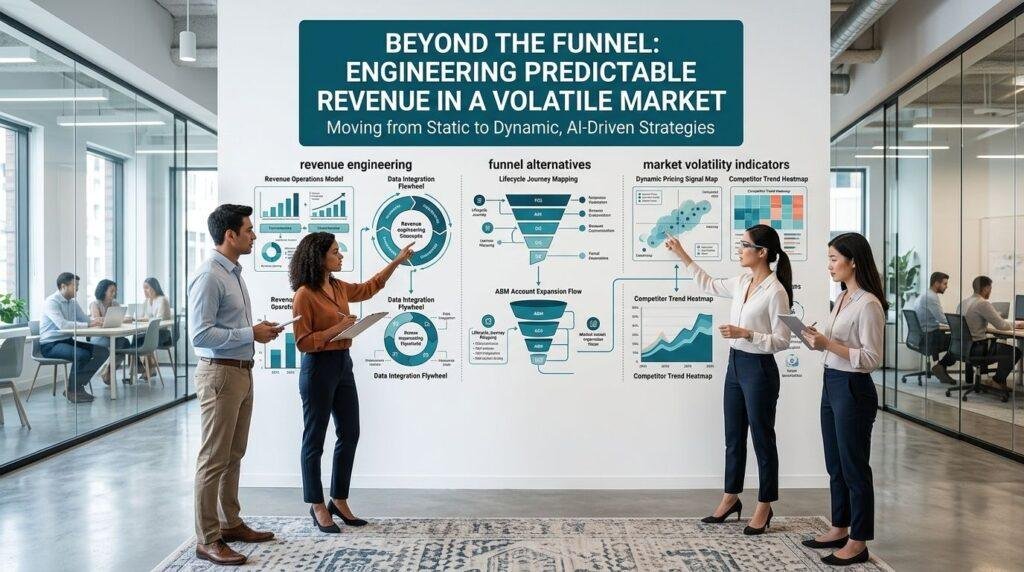
Beyond the Funnel: Engineering Predictable Revenue in a Volatile Market.

The Collapse of the Linear Sales Funnel The traditional marketing funnel is broken. For decades, businesses operated under a simple premise: pour cold traffic into the top, nurture them through the middle, and collect revenue at the bottom. But in the 2026 economic landscape, this linear progression is a dangerous oversimplification. Driven by AI-powered search engines, changing privacy laws, and extreme digital fatigue, modern B2B and high-ticket B2C consumer behavior is chaotic. A prospect might discover your brand via a Connected TV Advertising spot, research your reputation on their mobile phone, ignore three emails, and then suddenly convert via an on-site chat box. If your marketing strategy relies on a rigid, single-path sequence, you are actively burning capital. According to the 2026 Marketing Statistics from HubSpot, companies relying solely on standard inbound funnels saw their customer acquisition costs (CAC) jump significantly this year. To build true Predictable Revenue, you must transition from a simple funnel to a dynamic revenue architecture. At Social Ivy Media, we map your systems to reality, ensuring your Website Design & Development functions as an adaptable net rather than a leaky bucket. SECTION 1: The Diagnostic — The Hidden Costs of Funnel Fragmentation When a market experiences volatility, most business owners make the same mistake: they buy more ads. They throw money at Pay Per Click (PPC) Traffic hoping sheer volume will fix a broken monetization loop. This approach ignores the underlying systemic issue. The Friction Tax When your front-end Social Media Management & Marketing is completely siloed from your back-end sales operations, you pay an invisible “Friction Tax.” Leads get dropped, follow-ups are delayed, and data is lost. If your visual messaging on social media doesn’t match the premium feel of your physical Print Media, you break the trust loop. The prospect bounces, and your ad spend is wasted. STRATEGIST WARNING: The “Ghost Lead” Epidemic If your organization takes more than 15 minutes to respond to an inbound digital lead, the conversion probability drops by over 80%. Relying on manual human workflows to triage new inquiries creates a structural bottleneck that prevents predictable scaling. SECTION 2: The Infrastructure of Predictable Revenue Engineering stabilization into your revenue streams requires a framework that addresses three core areas: Intent Tracking, Response Automation, and Channel Diversification. 1. Capturing High-Intent Windows In a volatile market, buying windows open and close rapidly. You must have the data infrastructure to capture intent the moment it peaks. We deploy the Best Conversion Rate Optimization Tools for Marketers (2026) to track user interaction down to individual behavioral signals, allowing for real-time asset optimization. 2. Eradicating Delay via Automation To keep conversion rates stable, communication must be instantaneous. Integrating real-time Live Chat Lead Conversion platforms directly into your digital footprint ensures no lead is left unattended. This automated front-line setup qualifies prospects immediately, scheduling high-value calls without human intervention. 3. The “Phygital” Moat Relying entirely on digital channels exposes your business to algorithm volatility. True market leaders protect their pipelines by pairing digital touchpoints with tangible Print Media. Sending automated, hyper-targeted physical mailers to premium digital leads creates a multi-sensory brand experience that digital-only competitors cannot match. SECTION 3: The Technical Execution — Behavioral Optimization Revenue stability is won or lost in the user interface. If a prospect experiences layout confusion, your revenue pipeline stalls. As demonstrated in recent teardowns of the Best SEO Websites [Updated for 2026], user retention is directly tied to a cohesive visual ecosystem. Mismatched typography, sluggish load speeds, or a dated logo instantly degrade your perceived authority. By upgrading your foundational Logo & Graphic Design assets and optimizing your site layout according to the 10 Best Conversion Rate Optimization Tools in 2026, you can systematically lower friction points. When your digital platforms are engineered for intuitive task completion, cold traffic converts with predictable consistency. SECTION 4: The ROI of Revenue Architecture — Data Analytics When you move past transactional funnels and invest in complete ecosystem architecture, your core business metrics improve dramatically. Performance Vector Fragmented Funnel Model Engineered Revenue Architecture Lead Capture Mechanism Static Contact Forms Real-Time Live Chat Automation Data Tracking Capability Fragmented Analytics Closed-Loop Predictive CRO Tools Pipeline Vulnerability High (Dependent on single channels) Low (Multi-channel coverage) Customer Retention (LTV) Sub-optimal due to poor follow-up Maximized via Automated Systems According to Incremys 2026 Digital Marketing Statistics, companies operating with a unified data and visual scheme across all platforms report a 40% improvement in long-term lead retention. This efficiency optimizes your Pay Per Click (PPC) Traffic spending, maximizing your return on ad spend (ROAS). SECTION 5: Why Social Ivy Media? Social Ivy Media isn’t an agency that simply tracks vanity metrics like impressions or clicks. We are growth architects. Led by CEO Dion De Lauder, our business model is engineered around AGILE principles, intentionally built to thrive inside shifting, competitive markets like St. Petersburg. Whether we are consulting through high-impact 1 on 1 Coaching & Consulting or overhauling your regional visibility through Local & Competitive SEO, we build integrated ecosystems where every digital asset supports your bottom line. We use The Best Link Building Tools for Digital Marketing (2026 Guide) and 7 Top Link-Building Tools for SEO Results in 2026 to scale your domain authority while simultaneously optimizing your Review & Reputation Management systems to turn buyer trust into an automated asset. SECTION 6: The 30-Day Stabilization Roadmap CONCLUSION: Take Control of Your Pipeline Your revenue engine is the most critical infrastructure in your business. Until it stagnates. Relying on outmoded, disjointed marketing tactics during market shifts is a serious business risk. To build an enduring enterprise, you must transition from brittle sales tactics to a resilient revenue architecture. At Social Ivy Media, we don’t just build brands. We build empires.

Beyond the Funnel: Engineering Predictable Revenue in a Volatile Market. Read More »

Beyond the Funnel: Engineering Predictable Revenue in a Volatile Market.

The Collapse of the Linear Sales Funnel The traditional marketing funnel is broken. For decades, businesses operated under a simple premise: pour cold traffic into the top, nurture them through the middle, and collect revenue at the bottom. But in the 2026 economic landscape, this linear progression is a dangerous oversimplification. Driven by AI-powered search engines, changing privacy laws, and extreme digital fatigue, modern B2B and high-ticket B2C consumer behavior is chaotic. A prospect might discover your brand via a Connected TV Advertising spot, research your reputation on their mobile phone, ignore three emails, and then suddenly convert via an on-site chat box. If your marketing strategy relies on a rigid, single-path sequence, you are actively burning capital. According to the 2026 Marketing Statistics from HubSpot, companies relying solely on standard inbound funnels saw their customer acquisition costs (CAC) jump significantly this year. To build true Predictable Revenue, you must transition from a simple funnel to a dynamic revenue architecture. At Social Ivy Media, we map your systems to reality, ensuring your Website Design & Development functions as an adaptable net rather than a leaky bucket. SECTION 1: The Diagnostic — The Hidden Costs of Funnel Fragmentation When a market experiences volatility, most business owners make the same mistake: they buy more ads. They throw money at Pay Per Click (PPC) Traffic hoping sheer volume will fix a broken monetization loop. This approach ignores the underlying systemic issue. The Friction Tax When your front-end Social Media Management & Marketing is completely siloed from your back-end sales operations, you pay an invisible “Friction Tax.” Leads get dropped, follow-ups are delayed, and data is lost. If your visual messaging on social media doesn’t match the premium feel of your physical Print Media, you break the trust loop. The prospect bounces, and your ad spend is wasted. STRATEGIST WARNING: The “Ghost Lead” Epidemic If your organization takes more than 15 minutes to respond to an inbound digital lead, the conversion probability drops by over 80%. Relying on manual human workflows to triage new inquiries creates a structural bottleneck that prevents predictable scaling. SECTION 2: The Infrastructure of Predictable Revenue Engineering stabilization into your revenue streams requires a framework that addresses three core areas: Intent Tracking, Response Automation, and Channel Diversification. 1. Capturing High-Intent Windows In a volatile market, buying windows open and close rapidly. You must have the data infrastructure to capture intent the moment it peaks. We deploy the Best Conversion Rate Optimization Tools for Marketers (2026) to track user interaction down to individual behavioral signals, allowing for real-time asset optimization. 2. Eradicating Delay via Automation To keep conversion rates stable, communication must be instantaneous. Integrating real-time Live Chat Lead Conversion platforms directly into your digital footprint ensures no lead is left unattended. This automated front-line setup qualifies prospects immediately, scheduling high-value calls without human intervention. 3. The “Phygital” Moat Relying entirely on digital channels exposes your business to algorithm volatility. True market leaders protect their pipelines by pairing digital touchpoints with tangible Print Media. Sending automated, hyper-targeted physical mailers to premium digital leads creates a multi-sensory brand experience that digital-only competitors cannot match. SECTION 3: The Technical Execution — Behavioral Optimization Revenue stability is won or lost in the user interface. If a prospect experiences layout confusion, your revenue pipeline stalls. As demonstrated in recent teardowns of the Best SEO Websites [Updated for 2026], user retention is directly tied to a cohesive visual ecosystem. Mismatched typography, sluggish load speeds, or a dated logo instantly degrade your perceived authority. By upgrading your foundational Logo & Graphic Design assets and optimizing your site layout according to the 10 Best Conversion Rate Optimization Tools in 2026, you can systematically lower friction points. When your digital platforms are engineered for intuitive task completion, cold traffic converts with predictable consistency. SECTION 4: The ROI of Revenue Architecture — Data Analytics When you move past transactional funnels and invest in complete ecosystem architecture, your core business metrics improve dramatically. Performance Vector Fragmented Funnel Model Engineered Revenue Architecture Lead Capture Mechanism Static Contact Forms Real-Time Live Chat Automation Data Tracking Capability Fragmented Analytics Closed-Loop Predictive CRO Tools Pipeline Vulnerability High (Dependent on single channels) Low (Multi-channel coverage) Customer Retention (LTV) Sub-optimal due to poor follow-up Maximized via Automated Systems According to Incremys 2026 Digital Marketing Statistics, companies operating with a unified data and visual scheme across all platforms report a 40% improvement in long-term lead retention. This efficiency optimizes your Pay Per Click (PPC) Traffic spending, maximizing your return on ad spend (ROAS). SECTION 5: Why Social Ivy Media? Social Ivy Media isn’t an agency that simply tracks vanity metrics like impressions or clicks. We are growth architects. Led by CEO Dion De Lauder, our business model is engineered around AGILE principles, intentionally built to thrive inside shifting, competitive markets like St. Petersburg. Whether we are consulting through high-impact 1 on 1 Coaching & Consulting or overhauling your regional visibility through Local & Competitive SEO, we build integrated ecosystems where every digital asset supports your bottom line. We use Advanced Link-Building Tools (2026 Guide) to scale your domain authority while simultaneously optimizing your Review & Reputation Management systems to turn buyer trust into an automated asset. SECTION 6: The 30-Day Stabilization Roadmap CONCLUSION: Take Control of Your Pipeline Your revenue engine is the most critical infrastructure in your business. Until it stagnates. Relying on outmoded, disjointed marketing tactics during market shifts is a serious business risk. To build an enduring enterprise, you must transition from brittle sales tactics to a resilient revenue architecture. At Social Ivy Media, we don’t just build brands. We build empires.

Beyond the Funnel: Engineering Predictable Revenue in a Volatile Market. Read More »

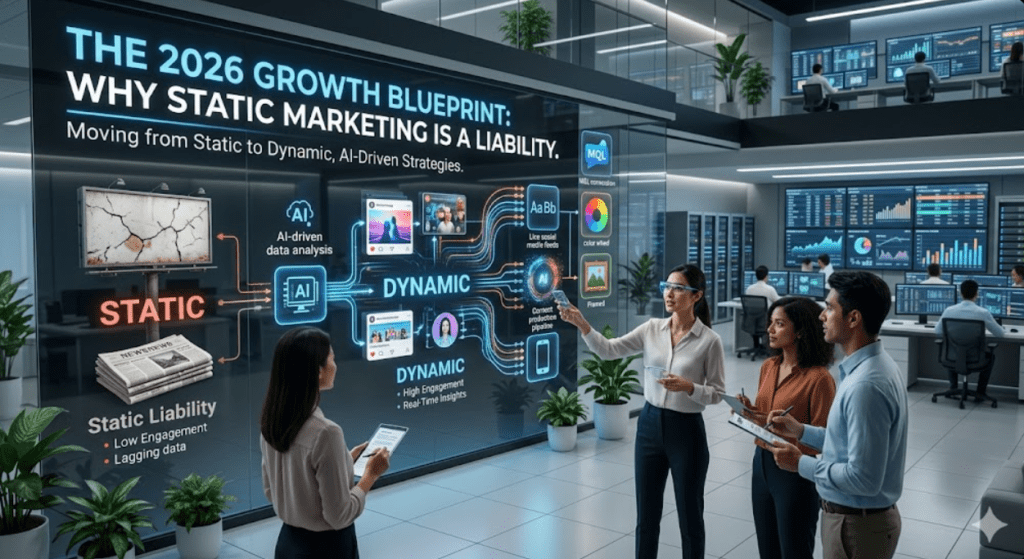
The 2026 Growth Blueprint: Why Static Marketing is a Liability.

The Death of the “Set It and Forget It” Era Welcome to 2026, where the “traditional” marketing plan is officially obsolete. If your business is still operating on a quarterly strategy that was decided months ago, you aren’t just behind—you are holding a liability. The 2026 economy moves at the speed of light, driven by generative AI search, real-time social trends, and a consumer base with zero patience for irrelevant messaging. According to the 2026 Marketing Statistics from HubSpot, 78% of high-growth companies have moved away from static annual plans in favor of AGILE Marketing. At Social Ivy Media, we view marketing not as a department, but as a living architecture. If your Website Design & Development isn’t constantly evolving based on live data, it is a sinking ship. SECTION 1: The Diagnostic — Why Static is a Strategic Risk In a high-stakes market like St. Petersburg, Florida, your competitors are no longer just the shop down the street—they are any brand that can provide a more personalized, real-time experience. The “Marketing Debt” Problem Static marketing creates “Marketing Debt.” Every time you run a Pay Per Click (PPC) Traffic campaign that leads to a generic, unoptimized page, you are paying interest on that debt. You lose data, you lose leads, and you lose market authority. STRATEGIST WARNING: The Silo Effect When yourSocial Media Management & Marketingoperates independently of yourSales & Marketing Funnel Design, the resulting friction is visible to the consumer. In 2026, consumers can smell a disconnected brand from a mile away. SECTION 2: The 2026 Growth Blueprint Pillars To thrive, your brand must be built on four specific pillars of “Growth Architecture.” 1. Real-Time Data Integration Your marketing should respond to live signals. We leverage the Best Conversion Rate Optimization Tools in 2026 to see exactly where visitors are dropping off and adjust the experience in real-time. 2. The Phygital Synergy Static digital ads are easily ignored. The 2026 blueprint integrates digital precision with high-end Print Media. A physical touchpoint that matches a digital Connected TV Advertising spot creates a “Trust Loop” that static digital-only brands can never achieve. 3. Automated Lead Nurturing If a human has to manually follow up with every lead, your growth is capped. By deploying Live Chat Lead Conversion and automated CRM workflows, your business grows while you sleep. SECTION 3: The Technical Solution — Moving to AGILE Agility is the ultimate competitive advantage. As noted in the Incremys 2026 Digital Marketing Statistics, brands that pivot their creative and targeting every 14 days see a 3x higher ROI than those on a 90-day cycle. Predictive Architecture We use Social Media Benchmarking Data (2026) to predict where the market is moving before it gets there. This allows us to adjust your Local & Competitive SEO strategy to capture search volume for emerging trends while your competitors are still fighting for last year’s keywords. SECTION 4: The ROI of the Blueprint — Performance Comparison The numbers don’t lie. Moving from static to AGILE is the difference between surviving and dominating. Metric Static Marketing Model 2026 Growth Blueprint Strategy Refresh Quarterly / Annual Bi-Weekly / Real-Time Lead Response Time Hours / Days Under 2 Minutes (Live Chat) CPA (Cost Per Acquisition) Increasing annually Optimized & Decreasing Conversion Tools Basic Analytics Advanced CRO Optimization As highlighted in the Best SEO Websites [2026 Update], Google’s new AI-driven search models prioritize brands that consistently update and optimize their content for current user intent. SECTION 5: Why Social Ivy Media? At Social Ivy Media, we are the architects of your growth. Led by CEO Dion De Lauder, our agency is built on the philosophy that your marketing should be as high-performance as your best employee. Whether you need 1 on 1 Coaching & Consulting to fix your internal sales process or a complete overhaul of your Logo & Graphic Design to match your premium pricing, we ensure every asset is pulling its weight. We use Advanced Link-Building Tools (2026) to ensure that your AGILE content doesn’t just look good—it builds unshakeable domain authority. SECTION 6: The 30-Day Transition Plan CONCLUSION: The Cost of Inaction Your marketing engine is the most critical infrastructure in your business. Until it stagnates. Static marketing isn’t just “old school”—it is a financial liability that is actively draining your budget and handing market share to your more agile competitors. The 2026 Growth Blueprint isn’t a luxury; it is the minimum requirement for dominance. At Social Ivy Media, we don’t just build brands. We build empires.

The 2026 Growth Blueprint: Why Static Marketing is a Liability. Read More »