


The Hidden Liability in Your Growth Strategy
In corporate finance, every executive understands technical debt—the cost of choosing a quick, messy software fix today over a scalable architectural build that takes longer. Yet, few business leaders recognize a far more insidious drain on their balance sheet: marketing debt.
Marketing debt accrues whenever a brand prioritizes short-term metric spikes over long-term structural asset building. It is the consequence of selecting fast, superficial tactics over foundational growth systems. When you build your customer acquisition models entirely on volatile third-party advertising algorithms without investing in sustainable brand infrastructure, you aren’t actually scaling. You are taking out a high-interest functional loan.
As search saturation peaks and consumer data privacy frameworks tighten, the interest on that loan is coming due. Businesses that spent years treating marketing as a series of disconnected, ad-hoc tasks are watching their customer acquisition costs skyrocket while their baseline conversion metrics tank. If your growth engine requires a continuous, increasing injection of paid capital just to maintain your current revenue plateaus, your strategy isn’t yielding profits. It’s masking a profound structural deficit.
Section 1: The Diagnostic — Spotting the Leaks in Your Engine
Marketing debt does not announce itself overnight. It quietly accumulates across your operations, manifesting as subtle inefficiencies before hardening into a full-scale growth bottleneck. The most common driver of this liability is a reliance on disjointed, siloed execution models.
When a corporate team purchases immediate paid web traffic without establishing an optimized landing page system, or pushes social media content completely untethered from a logical conversion pipeline, debt accumulates. Over time, these disconnected efforts distort the entire buyer journey. This friction directly pushes your prospective customers away from your brand and straight toward leaner, structurally optimized competitors.
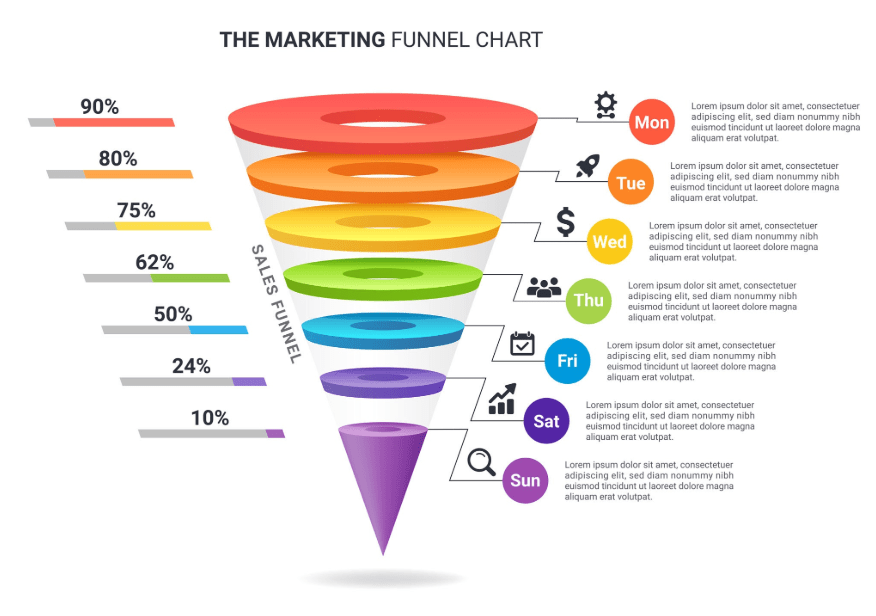
The underlying issue stems from a failure to track data across the entire customer lifecycle. Siloed data environments routinely obscure systemic operation failures. For example, an agency may showcase phenomenal top-of-funnel click-through rates while your internal sales floor deals with a cold, low-intent pipeline. Because legacy frameworks naturally prioritize surface-level metrics over comprehensive pipeline velocity, businesses consistently over-allocate capital to top-of-funnel volume while ignoring massive operational leaks further down the line.
⚠️ Strategist Warning
If your marketing architecture relies entirely on continuous paid ad spend to generate every single dollar of inbound revenue, you do not own an enterprise asset. You own an expense line item. The moment you decrease your ad spend, your revenue pipeline will instantly drop to zero.
Section 2: The Solution — Building an Asset-Based Ecosystem
To eliminate marketing debt and recapture lost margin, organizations must transition from fragmented tactical execution to a fully integrated, asset-driven architecture. This transition replaces temporary campaigns with permanent marketing infrastructure designed to compound in value over time.
Phase 1: Securing High-Intent Foundational Traffic
Paying off marketing debt begins by moving away from temporary, interruption-based ad models and focusing on sustainable visibility. Rather than competing for broad, overpriced keywords, brands can establish immediate authority by dominating high-intent commercial search spaces. Implementing systematic Local & Competitive SEO initiatives ensures your brand secures permanent digital real estate within local map layouts and modern conversational search engines.
This core organic baseline should be augmented with highly targeted Pay Per Click (PPC) Traffic campaigns. By pairing organic map dominance with highly focused paid search terms, you can capture high-intent buyers exactly when they are looking to transact, entirely bypassing generic web noise.
Phase 2: Converting Intent Through Engineered Infrastructure
Traffic capture is meaningless if your digital platform cannot convert visitors efficiently. A business website should never function as a passive brochure; it must serve as an active conversion vehicle. Building your digital home on a highly responsive, high-performance Website Design & Development foundation completely removes user friction, drastically reducing bounce rates and maximizing the value of every visitor.
To turn this traffic into revenue, you must replace basic contact forms with an advanced Sales & Marketing Funnel Design. An optimized funnel maps directly to distinct stages of consumer awareness, presenting tailored pathways for users whether they are ready to buy immediately or are evaluating options.
![A horizontal business infographic flowchart divided into three distinct panels, set against a teal-to-purple gradient background with digital circuit patterns. The title at the top reads, "INTEGRATED GROWTH ENGINE FLOW."
Panel 1: [Intent-Driven Inbound Traffic]: This red panel on the left features a large magnet icon pulling in relevant search query results in rounded bubbles. Queries include "Solution for X," "Pricing Guide," and "Review," accompanied by data checkmarks and small profile icons. Flow arrows point from the magnet towards the central panel. The sub-text at the bottom lists: "Keyword Targeting," "Content Relevance," and "Audience Segmentation."
Panel 2: [Frictionless Web Infrastructure]: A teal central panel focusing on a desktop computer, tablet, and mobile phone, all displaying a clean website interface. Hand icons are interacting with the screens, and circular speedometers with "speed" and "fast" labels indicate high performance. An explicit "server" icon with data lines is present. The sub-text at the bottom lists: "Load Speed Optimization," "Mobile First UX," and "Intuitive Navigation." A large flow arrow connects this panel to the right.
Panel 3: [High-Yield Marketing Funnels]: A purple and magenta panel on the right illustrating a structured multi-tier funnel. Tiers are labeled clearly from top to bottom: "AWARENESS (Ebook Downloads)," "CONSIDERATION (Demo Requests)," "QUALIFICATION (Lead Scoring)," and "DECISION (Purchase/Sign-up)." Icons relevant to each stage (people, documents, handshakes, money bags, multiplier) are integrated. The sub-text lists "nurture" loops and successful client avatars at the bottom. The entire funnel has a dynamic glow.
Arrows connect the three panels, showing the progression of user flow and data. All text is legible and incorporated into the design.](https://socialivymedia.com/wp-content/uploads/2026/07/Screenshot_95.png)
Phase 3: Immediate Capture and Reputation Acceleration
In a fast-moving market, lead decay happens in minutes. If a prospect reaches out and encounters a long delay, they will immediately jump to the next competitor. Implementing an automated Live Chat Lead Conversion system ensures that prospective buyers receive real-time answers, capturing hot leads when their intent is highest.
This real-time responsiveness must be backed by undeniable social proof. By deploying automated Review & Reputation Management systems, you can systematically capture and display authentic client feedback across critical review platforms, naturally breaking down customer hesitation at the final decision stage.
Phase 4: Long-Term Omni-Channel Brand Equity
True protection against marketing debt comes from building an omnipresent brand that reaches audiences across multiple environments. Consistently maintaining highly optimized campaigns through Social Media Management & Marketing keeps your brand top-of-mind, driving organic referral loops and brand searches that insulate you from ad platform price increases.
To solidify your presence, look beyond digital screens. Combining online positioning with premium Print Media creates a high-impact, physical connection with your target demographics. When these physical assets are shaped by professional Logo & Graphic Design, they project enterprise-level scale, creating an elite brand identity that small, tactical competitors simply cannot copy.
Finally, forward-thinking brands scale their messaging by tapping into streaming entertainment. Using precision-targeted Connected TV Advertising allows businesses to deliver cinematic video commercials directly to specific household profiles and geographic zones, merging the massive storytelling impact of traditional TV with the granular measurement capabilities of digital marketing.
Section 3: The Hard Data — Debt Elimination vs. Tactical Patches
The financial consequences of marketing debt are easily measurable. Independent data from Search Engine Journal shows that brands relying purely on short-term tactical patches see an average 22% annual increase in acquisition costs due to ad inflation and algorithm changes. Conversely, eMarketer reports that enterprises investing in integrated omni-channel structures see a substantial boost in customer lifetime value (LTV) because consistent touchpoints across multiple channels naturally build stronger brand loyalty.
From an offline perspective, data from the Data & Marketing Association (DMA) confirms that integrating physical direct mail or print media with digital retargeting can improve overall conversion efficiency by up to 40% compared to isolated digital tactics alone.
The performance comparison table below illustrates the stark operational differences between carrying heavy marketing debt and running an optimized Social Ivy Media architecture:
| Operational Metric | The Debt-Ridden Approach (Tactical Patches) | The Asset-Driven Approach (Social Ivy Architecture) | Bottom-Line Impact |
| Blended Customer Acquisition Cost (CAC) | Spikes 15% – 30% annually | Stabilizes or decreases over time | Protects your margins as you scale |
| Inbound Lead Response Lag | 2 – 8 Hours (High lead abandonment) | Under 90 seconds via automation | Captures hot intent before it cools |
| Organic Baseline Traffic Contribution | Less than 15% (Entirely ad-dependent) | 45% – 60% via compounding SEO | Creates a reliable revenue floor |
| Ad Budget Allocation Efficiency | 30% – 45% wasted on non-converting clicks | Over 90% target accuracy | Extracts maximum return from your ad spend |
| Funnel Conversion Architecture | Single-step form (High friction) | Dynamic, multi-tier behavior paths | Maximizes value from all traffic types |
Section 4: Why Social Ivy Media Is Your Growth Architect
Paying off marketing debt requires more than just launching new campaigns—it demands a complete structural overhaul. Operating out of St. Petersburg, Florida, Social Ivy Media engineers high-performance growth architectures designed to remove operational bottlenecks and build long-term business value.
Led by CEO Dion De Lauder, our team rejects the slow, bloated processes of old-school agencies that bill for hours instead of results. We operate on a strict Agile Marketing Execution framework, which focuses on rapid asset deployment, precise data measurement, and continuous optimization. We don’t hide behind confusing marketing jargon or vanity metrics like impressions and likes. Instead, we deliver clear financial data that maps our marketing efforts directly to your bottom-line profitability.
We audit your current market placement, reverse-engineer your competitors’ strategies, and deploy custom blueprints engineered to scale. When you partner with us, you gain a dedicated growth team focused entirely on turning your marketing expenses into a high-yielding corporate asset.
Section 5: The Recovery Framework — From Audit to Predictable ROI
Rebuilding a debt-ridden marketing model into a clean, compounding engine is a systematic process. Our blueprint follows four structured phases to ensure long-term stability and growth:
- Phase 1: The Debt & Leak Audit: We begin by stress-testing your entire digital and physical footprint. We track down hidden conversion bottlenecks, uncover wasted ad spend, evaluate data tracking gaps, and map out where competitors are capturing your market share.
- Phase 2: Core Engineering Rebuild: Next, we eliminate foundational gaps. We optimize your website speed, implement automated live conversational tools, structure local SEO indexing paths, and build clean landing pages to capture inbound traffic cleanly.
- Phase 3: Omni-Channel Integration: Once your core infrastructure is solid, we connect your multi-channel acquisition channels. We synchronize targeted PPC campaigns, map-based local SEO, automated social media touches, and high-impact physical assets into a unified marketing engine.
- Phase 4: Velocity Optimization & Consulting: With clean data flowing, we consistently optimize performance. We eliminate underperforming assets, scale winning ad variations, expand target demographics, and deploy direct 1 on 1 Coaching & Consulting protocols to help your internal sales team convert incoming leads at maximum velocity.
Conclusion: Pay Off the Debt and Own Your Market
Continuing to patch over a broken marketing strategy is an expensive road to stagnation. The businesses that dominate their industries understand that marketing is not a collection of sporadic, short-term expenses—it is a unified, compounding asset. By replacing high-interest tactical debt with an integrated infrastructure of traffic capture, high-converting web assets, and an omni-channel presence, you protect your business against rising costs and build a predictable engine for future growth.
Stop spending your hard-earned capital on temporary traffic fixes that disappear the moment your credit card is charged. Let’s look at the data, find your operational leaks, and build a marketing infrastructure that creates lasting equity.
Ready to clean up your marketing debt? Schedule your complimentary Growth Blueprint Strategy Session with Social Ivy Media today and let’s optimize your acquisition system for predictable revenue.